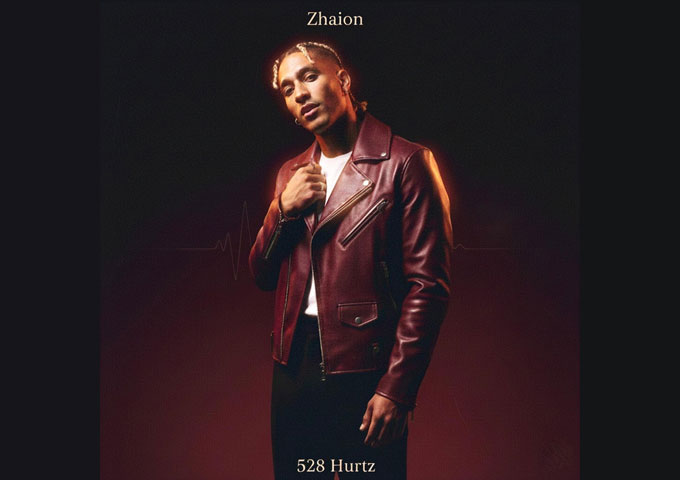
There is a rare kind of R&B that does not beg for attention but instead draws you closer, slowly, deliberately, until you realize you are already inside it. Zhaion understands this intimacy with surgical precision. With the release of “528 Hurtz”, the emerging artist refines a sound that is as emotionally grounded as it is sonically futuristic, crafting a late-night meditation on love as vibration, memory, and ache.
Built on warm analog synths that hum like distant neon and cushioned by a deep sub-bass that moves beneath the skin rather than over it, “528 Hurtz” is less a song than a space. A soft electric piano threads through the arrangement, evoking romantic 80s chord progressions while remaining firmly planted in modern moody R&B. The slow-bounce groove gives the track a gentle sway, like breathing in sync with someone who may or may not still be there. Zhaion’s breathy vocal delivery and restrained falsetto float above the instrumentation with deliberate vulnerability. Nothing is forced. Nothing is overstated.
What makes Zhaion particularly compelling is the integrity behind the artistry. Every lyric is human-authored, every master and publishing right fully owned. AI serves strictly as a production accelerator, not a substitute for authorship. In a landscape where authenticity can feel negotiable, that distinction matters. The emotional core of “528 Hurtz” is unmistakably human.
The concept at the heart of the song is deceptively simple yet psychologically rich. The title references 528 Hz, often associated with healing frequencies, but Zhaion reframes it as something more fragile. Love here is not a miracle cure. It is a signal you can feel but cannot fully grasp. The recurring phrase “five two eight” becomes both a lover’s name and a metaphor for emotional resonance. It is intimacy translated into vibration.
From the opening lines, the imagery is tactile and cinematic. City glow against skin, soft waves rolling in. The beloved appears and fades like a half-played note, establishing a motif of incompletion. Zhaion positions love as something that flickers between presence and absence. The chest becomes a field of “little lights” that move, regress, pulse, and turn. Emotion is rendered physical, electrical. The body is an antenna picking up signals it cannot control.
The chorus crystallizes the tension. The beloved is described as a frequency that cannot be escaped, a signal that cannot be replaced. This language of transmission and reception mirrors digital-era romance, where connection often exists through screens, notifications, and echoes rather than touch. “Empty room, quiet screens” is a striking phrase that captures modern loneliness without melodrama. The lover drifts “in between,” more tone than body, more spark than substance. Zhaion does not condemn this kind of love. Instead, he lingers inside its ambiguity.
Vocally, the performance is masterfully restrained. Rather than belting the pain, Zhaion lets it simmer. The falsetto feels like a whisper in the dark, as if the words are being confessed rather than performed. This choice amplifies the song’s emotional impact. The ache is not explosive. It is internal, quiet, and persistent. When he repeats that “it still hurtz,” the stylized spelling underscores the conceptual framework. Hurt becomes frequency, a vibration that continues even after the source fades.
The second verse deepens the metaphor. Rings, hums, static. Technology becomes both conduit and barrier. The beloved is heard in the noise, felt in the distortion. There is something deeply contemporary in this portrayal of attachment. We are connected at all times, yet rarely certain of permanence. Zhaion captures the way love can feel omnipresent and elusive at once.
The bridge is particularly poignant. A plea to “fade me in, do not fade me out” reveals the underlying fear of emotional buffering, of being half-loaded in someone’s life. “All your colors through the wire” is a line that beautifully merges warmth with circuitry. Even through digital mediation, there is sweetness and fire. Yet it remains a “quiet fire,” contained, controlled, almost cautious.
What distinguishes “528 Hurtz” from trend-driven R&B is its refusal to chase intensity for its own sake. There are no dramatic drops or viral-ready hooks engineered for instant gratification. Instead, the track thrives on atmosphere and emotional restraint. It is designed for after-hours playlists, for solitary drives through illuminated streets, for moments when vulnerability feels safer in the dark.
From a production standpoint, the balance is meticulous. The analog textures evoke nostalgia without slipping into pastiche. The sub-bass anchors the track in contemporary sonic standards suited for DSP performance and sync placements. Cinematic space surrounds the vocal, making it equally viable for visual storytelling. This is catalog-first artistry, scalable and intentional, yet never sterile.
Zhaion is carving a lane that feels both intimate and forward-thinking. By blending contemporary R&B with atmospheric soul and cinematic pop elements, he positions himself not merely as a singles artist but as a curator of mood. The project is built for longevity, for emotional replay value, for those who return to songs not because they are loud, but because they understand something unspoken.
Ultimately, “528 Hurtz” lingers because it articulates a universal experience with subtlety. Love as frequency. Desire as signal. Pain as echo. It acknowledges that some connections never fully disappear. They continue to vibrate beneath the surface, a low hum in the chest, a tone that resurfaces in quiet rooms and dim screens.
For listeners craving R&B that values atmosphere over algorithm, vulnerability over spectacle, and ownership over imitation, Zhaion delivers a resonant statement. “528 Hurtz” does not shout its brilliance. It pulses. And if you are willing to sit still long enough, you will feel it.