2AM Ricky’s “Move” ft. Godzena Turns Southern Swagger and Bass Into a History-Making Anthem
Before “Move” ever touched a chart, it was three years in the making, built voice note by voice note between Atlanta and Mexico. Now the record stands as both a dancefloor staple and a milestone, the song that made 2AM Ricky the first Black transmasculine artist to chart globally on iTunes. What follows is the story of how a bass-heavy, retro-tinged single became a statement about visibility, community, and sound.
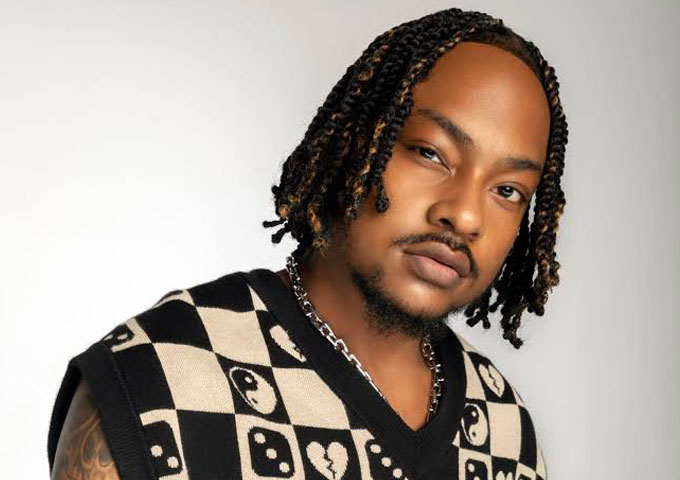
2AM Ricky does not describe himself simply as a musician. The Atlanta-based artist, activist, and storyteller has built a career at the intersection of R&B, hip-hop, and advocacy, and “Move” sits at the center of that intersection more literally than most singles manage. Featuring Miami vocalist and songwriter GODZENA, the track fuses funky house energy with EDM textures and a nod to 1970s disco, filtered through Ricky’s Southern hip-hop instincts and jazz-inflected sensibility. The result is a song built for cookouts and beach drives as much as clubs, a summer anthem in the most literal sense, engineered to move bodies first and minds second, though it accomplishes both.
The commercial story alone would be notable. Within twelve hours of release, “Move” climbed to #3 on the iTunes Electronic chart, a rise fast enough to catch Ricky himself off guard. He has said the moment brought him to tears, not only for what it meant personally but for what it represented historically. Citing GLAAD’s 2021 Studio Responsibility Index, which found that only 1.4 percent of characters in major studio films were depicted as transgender, with an even smaller sliver representing trans men, Ricky has framed his chart placement as a corrective of sorts, a visible marker in a landscape that has offered so few. Being the first Black trans masculine artist to chart globally on iTunes is not incidental to the song. It is, in Ricky’s own telling, precisely the point.
But chart position tends to fade from memory faster than a good hook, and “Move” earns its staying power through the writing itself. The lyrics move in two registers at once. On the surface, they are pure invitation, a call to the dancefloor built around the simple, repeated command to move, paired with imagery of hot steps and turned heads when someone walks into a room. That surface layer is where the disco lineage shows most clearly, all rhythm and physicality, the kind of chorus that needs no explanation to work on a crowd.
Underneath, though, the verses carry a looser, more conversational hip-hop cadence, full of Southern vernacular and playful bravado. References to indulgence, from drinks to smoke to the general haze of a good night, root the track in a specific after-hours world, the kind of late-night scene where inhibition loosens and people show up as themselves. There is a recurring motif built around mornings after, the idea that whatever happens under cover of night carries into daylight, unashamed. It is a lyrical choice that reframes the song’s title. Movement here is not only about dancing. It is about motion through a night, through desire, through the freedom to be openly wanted and openly wanting.
One turn of phrase stands out for doing more work than a typical hook line. Ricky plays on the idea of being read one’s rights, twisting the familiar legal phrase into a romantic confession, the suggestion that if loving someone is wrong, he would rather be caught than stop. It is a clever bit of wordplay, but it also carries weight given who is delivering it. For an artist who has spoken candidly about facing discrimination for his gender identity within the industry, a line about being unapologetic in love, consequences be damned, reads as more than a punchline. It reads as a thesis statement disguised as a party lyric.
That duality, joy on the surface and defiance underneath, is consistent with how Ricky has described the song’s origins. He has said he wrote “Move” thinking specifically of masculine-presenting queer folks, particularly Black transmasculine men, who often find themselves without a clear place in nightlife culture built around narrower categories. Rather than carve out a separate lane, Ricky has said his intention was to dissolve the barrier altogether, making a record that lives comfortably within the broader Black musical tradition while still speaking directly to an audience too often left outside of it. Intersectionality, in his framing, is not a talking point layered onto the song. It is the compositional principle behind it.
The production carries its own layered history. Built with Mexico-based producer WICK over roughly three years of long-distance collaboration, the track eventually found its final shape with vocal arrangement from Grammy-nominated songwriter Tami Latrell, administered through the Mezzo Agency. Ricky has described hearing the finished record for the first time at Bravo Ocean Studios, dancing alongside his collaborators, as one of the defining moments of the process, the point where years of scattered voice memos finally became a finished song.
The momentum since release has been difficult to ignore. Ricky has shared stages with Doechii, Khalid, and Kalii, including an appearance at World Pride, and supported sold-out dates for CeCe Peniston, all while maintaining an independent, band-driven live show without major-label backing. He has also continued building his platform beyond music, including work with SkiimooTech on the VDOM, described as the world’s first ultra-humanistic prosthetic device aimed at issues of erectile dysfunction and identity affirmation, and continued advocacy around trans health, safety, and artistic development within the industry. As a member of the GLAAD EMEI cohort, he performed at MobiFest in New York City, and he is set to appear in season two of TransWorld Atlanta.
With a music video for “Move” and a broader body of work now unfolding, including the follow-up single “Love Ain’t Rational” featuring Ari LaShell and the forthcoming debut album Don’t Forget to Call, the song looks less like a standalone breakout and more like a foundation. It set the terms Ricky has continued building on since: genre-blurring, unapologetically Southern, rooted in community, and impossible to separate from the person making it.
For an artist whose sound draws comparisons to André 3000, Anderson .Paak, Giveon, and Snoh Aalegra, “Move” remains the clearest early distillation of that range, a record that asks listeners to dance first and understand later, trusting that the understanding will come regardless.